
Back Pain from Lifting: Safe Mechanics & How to Prevent Injury
Most lifting-related back pain comes down to technique — a rounded back, a load held too far out, or a twist under weight. Here's how lifting loads your spine, the safe mechanics that protect it (the hip hinge, keeping the load close, never twisting under load), the injuries poor lifting causes, and how chiropractic care at Thrive Chiropractic in Troy, MI helps you recover and prevent the next one.
How Lifting Loads Your Spine
Lifting is one of the most common ways people hurt their lower back — and in the large majority of cases, it comes down to how the lift was done rather than the weight alone. The lumbar spine is strong and built to handle load, but it's also a lever, and a lever's math is unforgiving: the farther a load sits from your body and the more your back rounds to reach it, the more force lands on the discs, joints, and muscles of your lower back. Good technique keeps that force in a range your spine handles comfortably. Poor technique multiplies it.
Two ideas explain most lifting injuries. First, a rounded back changes who does the work. When your spine curves forward under load, the muscles and ligaments of the low back — not the powerful hips and legs — end up carrying the lift, and they're simply not designed for it. Second, distance and rotation multiply the strain. A load held out in front of you, or a twist of the spine while it's loaded, dramatically raises the force on the low-back structures compared with the same weight held close and lifted straight. Put those together and you have the recipe behind most "I bent over and my back went" moments — the strain overlaps closely with a lumbar sprain and strain and with back muscle spasms.
The Lifting Mistakes That Cause Back Pain
Most lifting-related back pain traces to a handful of familiar mistakes. They often stack up in the same lift:
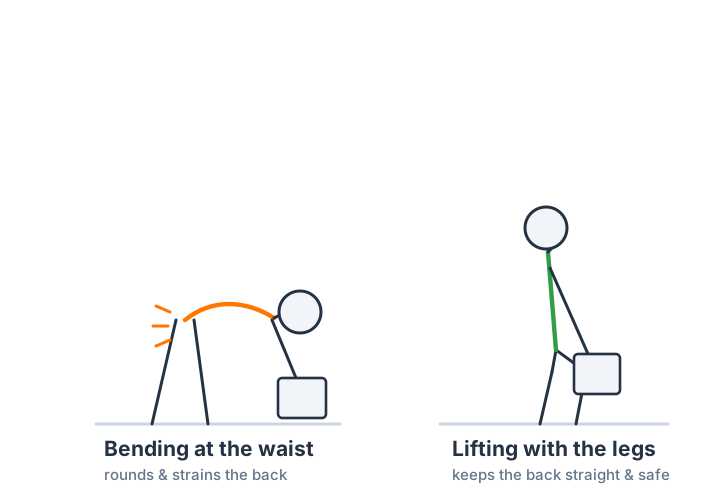
- Rounding the back to reach the load. Bending from the waist with a curved spine puts the low back in its weakest position and hands the lift to the wrong muscles.
- Holding the load too far from your body. The farther out the weight sits, the more leverage works against your lower back — a light object held at arm's length can strain your back more than a heavier one held close.
- Twisting while lifting. Rotating your spine under load is one of the fastest ways to injure a disc or ligament, because the twist and the weight combine on the same structures.
- Lifting something heavier or more awkward than expected. An unbalanced or surprising load can jerk your back before you can brace for it.
- Lifting cold or fatigued. A back that hasn't warmed up, or one already tired from a long day of sitting or standing, has less margin to absorb a lift.
Often the "trigger" seems surprisingly small for how much it hurts — a light box, a bag of groceries — because it's the last straw on a spine already loaded by everyday strain, not the whole story on its own.
Safe Lifting Mechanics That Protect Your Back
The good news is that safe lifting is learnable, and it's the same core pattern whether you're moving a box, a barbell, or a toddler. Here's the difference the technique makes:
Build the lift around these steps:
- Hinge at the hips, not the waist. Push your hips back and bend your knees so you lower toward the load with a long, neutral spine — chest up, back flat, not rounded.
- Keep the load close. Bring the object right up against your body before you stand, so your back isn't fighting extra leverage.
- Brace your core. Take a breath and gently tighten your midsection before you lift, so your trunk supports your spine. A stronger core makes this automatic — see core stability for back pain.
- Drive up with your hips and legs. Let the big muscles of your hips and thighs power the lift while your spine simply holds its position.
- Never twist under load. To change direction, turn with your feet, not your spine. Set the load down before you pivot if you need to.
- Respect the load and your limits. Test the weight first, get help or a cart for anything heavy or awkward, and warm up before a session of heavy lifting.
Common Symptoms
Lifting-related back pain tends to show up in familiar ways:
- Sudden sharp or "catching" pain in the low back during or right after a lift
- Muscle spasm — the low back tightening protectively, sometimes locking you into one position
- A dull ache and stiffness that sets in over the hours after the lift, often worse the next morning
- Pain that eases with gentle movement but flares when you bend, twist, or lift again
- Pain that radiates into the buttock or down a leg, or comes with numbness or tingling — a sign a nerve may be involved, and a reason to be seen sooner
Most lifting strains stay in the back itself and settle over days to a couple of weeks with sensible care. Pain that travels down a leg, or arrives with numbness, tingling, or weakness, points toward a nerve — that can shade into sciatica or the territory of disc problems and is worth having evaluated.
Who's Most at Risk?
Anyone can strain their back with a lift, but it's more common in:
- People whose jobs involve lifting, bending, or repetitive material handling
- Athletes and gym-goers, where heavy or fast loading raises the stakes — the sport-specific angle is covered in back pain from sports
- Weekend warriors who go hard occasionally without conditioning or warming up
- Desk workers whose backs are deconditioned from long sitting, then loaded by an ordinary lift
- Older adults and anyone with a weak core or a prior back injury, who have less margin to absorb a lift
Frequently more than one applies — a sedentary week followed by a heavy moving day is a very typical setup for a lifting strain.
What to Expect at Thrive Chiropractic
At Thrive Chiropractic in Troy, MI, care for lifting-related back pain is conservative and built around your exam. Dr. Rubinstein typically combines soft-tissue and massage therapy to calm the protective spasm around a strained segment, chiropractic adjustments or mobilization to restore motion to stiff lumbar and pelvic joints, and lifting-technique and core coaching so the same injury doesn't keep recurring. When a disc is involved, spinal decompression may enter the conversation, and if foot mechanics add uneven load, custom orthotics can be part of the plan.
The plan is honest about what's realistic: chiropractic care helps a lifting strain heal and move better, and technique coaching lowers the odds of the next one — it isn't a one-time cure, and most recoveries happen over a series of visits. You'll get a specific timeline after your exam. If your exam turns up something that needs medical attention, Dr. Rubinstein will say so plainly and coordinate the right referral.
When to See a Chiropractor
A little soreness after a heavy lift is normal and usually settles on its own. It's worth getting evaluated when back pain after lifting keeps coming back, doesn't ease within a couple of weeks, or starts to interfere with sleep, work, or activity. Getting ahead of it gives conservative care and better technique the best chance to work before a strain becomes a recurring problem.
A small set of symptoms, though, are true emergencies and should never be waited out after a lift.
Short of those emergencies, radiating leg pain, numbness, or tingling after a lift are all good reasons to be seen sooner rather than later. When you're ready, you can schedule a visit with Dr. Rubinstein for a thorough exam, an honest read on what happened, and a conservative plan aimed at healing the strain and keeping it from repeating.
Frequently Asked Questions
Lifting-related back pain raises a lot of practical questions — why lifting hurts your back, the correct way to lift, whether "lift with your legs" is right, and how this differs from a lumbar sprain. Those are answered in detail in the FAQ section on this page.
If you've hurt your back lifting, or you want to lift without hurting it, schedule a visit with Dr. Rubinstein at Thrive Chiropractic in Troy, MI. You'll get a thorough exam, an honest read on the cause, and a conservative plan aimed at relieving the pain and building technique that protects your back. You can also explore the wider Back Pain library for related topics like lumbar sprain and strain.
Back Pain Relief Guide (PDF)A one-page take-home guide: simple steps that help now, what's usually behind back pain, and the warning signs that mean it's time to see a doctor.PDFThis article is for general education and is not a substitute for professional medical advice, diagnosis, or treatment. Always consult a qualified healthcare provider about your specific situation.
Frequently Asked Questions
Why does my back hurt after lifting something?
Usually it's the mechanics. Lifting with a rounded back, holding the load away from your body, or twisting while you lift all multiply the force on your lower back, and the muscles and ligaments can be overstretched or strained in the process. Sometimes it's a single heavy lift; often it's the last straw on a back already tired from everyday load. Good technique is what keeps that force in check.
What is the correct way to lift to protect your back?
Hinge at your hips rather than rounding your back, keep the load as close to your body as you can, brace your core, and let your hips and legs do the lifting. Never twist while you're holding the load — turn with your feet instead. Dr. Rubinstein can walk you through the hip hinge so it becomes automatic for the lifts you do most.
Should I lift with my legs and not my back?
That advice is on the right track — the goal is to power the lift with your hips and legs while your spine stays long and neutral, not rounded. The nuance is that it's not only about bending your knees; it's about hinging at the hips and keeping the load close so your back isn't doing the work. Bracing your core ties it together.
How is this different from a lumbar sprain?
This guide is about technique and prevention — how to lift so you don't get hurt. A lumbar sprain or strain is the injury itself, the overstretched ligament or pulled muscle that poor lifting can cause. If you've already tweaked your back lifting, the lumbar sprain and strain article covers what's happening and how it heals.
Can a chiropractor help back pain from lifting?
Yes. Chiropractic care relieves the muscle spasm and restores motion to segments a lift has strained or stiffened, and it pairs that with lifting-technique coaching so it doesn't keep happening. Dr. Rubinstein will match the plan to your exam and to the kind of lifting you actually do, whether that's at work, the gym, or home.
Ready to get evaluated at Thrive Chiropractic?
Dr. Rubinstein will assess what’s really going on and build a care plan tailored to you. Reach out and we’ll get you scheduled.
2133 Crooks Road | Troy MI 48084