
Back Pain During Pregnancy: Causes, Relief & Safe Care
Low-back pain is one of the most common complaints of pregnancy, driven by a shifting center of gravity, ligaments loosened by pregnancy hormones, and the growing weight your spine carries. Here's what causes it, how it's evaluated, what's safe, and how gentle, pregnancy-adapted chiropractic care at Thrive Chiropractic in Troy, MI helps expecting moms find relief — always alongside your OB or midwife.
What Is Back Pain During Pregnancy?
Back pain during pregnancy is the aching, stiffness, and strain many expecting moms feel across the lower back and pelvis as their body changes over nine months. It's one of the most common experiences of pregnancy — and unlike some aches, this one usually has a clear, mechanical explanation rather than being a sign that something is wrong.
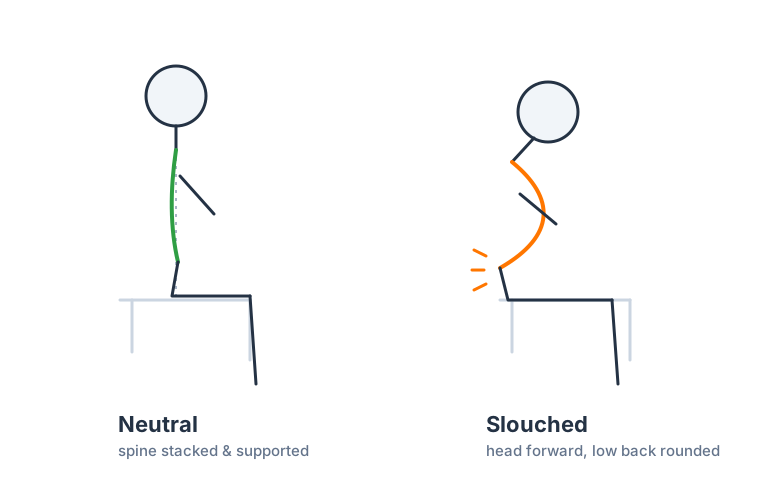
Pregnancy asks your spine to adapt week by week. As your baby grows and your center of gravity shifts forward, the natural curve of your lower back tends to deepen to keep you balanced, and the muscles along your spine and pelvis work harder to hold you upright. Layered on top of that, pregnancy hormones loosen the joints and ligaments throughout your body — including the pelvis — to prepare for birth, which can leave those joints feeling less stable. That's why back pain can show up even if your back was never a problem before. The reassuring part is that it's usually a posture- and weight-driven ache that responds well to gentle care.
What Causes Back Pain in Pregnancy?
Back pain in pregnancy usually comes from several normal changes stacking up at once rather than any single problem. The most common contributors are:
- A shifting center of gravity — as your belly grows and your weight moves forward, your lower-back curve deepens and the muscles supporting your spine work harder to keep you balanced
- Ligament laxity — rising relaxin and other pregnancy hormones loosen joints and ligaments across your whole body, including the pelvis, to prepare for birth, which can leave those joints feeling less stable and more easily strained
- The growing weight of pregnancy — the added load your spine and pelvis carry increases with each trimester, and much of it sits out in front, tugging on the lower back
- Pelvic-joint strain — the loosened joints at the back of the pelvis, the sacroiliac joints, often take on extra load and can become a distinct source of pain; you can read more in our guide to sacroiliac joint pain
- Everyday demands — more time resting or sitting in propped-up postures, and for many moms the constant lifting and carrying of an older little one
Because these changes build gradually, back pain often becomes most noticeable in the second and third trimesters, when the postural shift and the weight are greatest.
Common Symptoms
Back pain during pregnancy tends to show up in familiar ways:
- Aching and stiffness across the lower back, often worse after standing, walking, or sitting for a while
- Pain over the back of the pelvis — the sacroiliac joints on either side of the tailbone — which can spread into the buttock or the back of the hip
- A tired, heavy, or "giving-way" feeling in the low back and pelvis as the day goes on
- Discomfort turning over in bed or getting up from a chair, when the loosened pelvic joints are asked to move
- Occasional spasm or a catch with a sudden movement
For most moms this is uncomfortable but manageable, and it responds well to gentle care. Pain that travels down the leg past the knee, or comes with numbness, tingling, or weakness in the leg, points toward nerve involvement — often sciatica — and is worth mentioning so it can be assessed.
Who's Most at Risk?
Back pain can affect any pregnancy, but it tends to be more noticeable for:
- Moms in their second and third trimesters, as the postural shift and weight peak
- Those who had low-back pain before pregnancy or a history of back stiffness, who may start from a more vulnerable place
- Moms who sit for long stretches or spent a lot of time at a desk, leaving the back stiff and deconditioned
- Those carrying added day-to-day strain, such as lifting and chasing other little ones
- Moms who haven't yet found a supportive sleep setup, so the back isn't well supported at night
How Back Pain in Pregnancy Is Evaluated
A thoughtful evaluation matters even more in pregnancy, because the goal is both to understand your back and to make sure your comfort and your stage of pregnancy guide everything. At Thrive Chiropractic, Dr. Rubinstein starts by talking through how far along you are, when and where the pain shows up, how you're sleeping, whether it sits more in the low back or over the pelvis, and whether it ever radiates down a leg.
The hands-on exam is gentle and positioned for your comfort. He checks how your lower back and pelvis move, which joints feel stiff or irritated, and where the surrounding muscles are tight — while taking your changing body fully into account. He's also listening for anything that calls for closer attention, like numbness, tingling, or leg symptoms, which he'll assess directly. Throughout, this works hand in hand with your prenatal care: keeping your OB or midwife informed means everyone stays on the same page about what's normal for you and what's worth a closer look.
What to Expect at Thrive Chiropractic
At Thrive Chiropractic in Troy, MI, Dr. Rubinstein provides gentle care adapted for pregnancy, always tailored to your stage and comfort. Care often combines:
- Webster Technique, a gentle, pregnancy-focused approach that supports pelvic balance and comfort as your body changes — often a centerpiece of care for pregnancy-related low-back and pelvic strain
- Gentle chiropractic adjustments modified for pregnancy to restore motion to stiff lower-back and pelvic joints, using positioning and techniques suited to your changing body
- Soft-tissue and massage therapy to ease the tight muscles of the low back, hips, and pelvis
- Posture, movement, and support guidance you can use between visits, including foot support with custom orthotics where relevant
The focus is safe, comfortable relief that fits where you are in your pregnancy — and it's designed to complement, never replace, the care your OB or midwife is providing. You can learn more on our pregnancy care page.
Gentle Self-Care for Back Pain in Pregnancy
A few simple, pregnancy-friendly habits can ease back pain between visits:
- Support your back when you sleep. Side-lying with a full-length body pillow — hugged along your front and tucked between your knees — keeps your spine and pelvis in a neutral, supported line, and it's the position most often recommended in later pregnancy.
- Take frequent posture breaks if you sit or stand for long stretches, and avoid staying in one position too long.
- Move gently and often. Slow, comfortable walking and gentle range-of-motion movement help keep the low back and pelvis from stiffening up.
- Ease off heavy lifting, and when you do lift, bend at the hips and keep the load close rather than rounding and reaching.
- Use warmth on tight low-back and hip muscles for soothing relief (a warm compress or shower — easy to keep comfortable during pregnancy).
Because every pregnancy is different, always run new exercises or self-care by your OB, midwife, or care provider to make sure they fit your pregnancy.
When to See a Chiropractor
Mild, come-and-go low-back aching is a normal part of many pregnancies. It's worth getting evaluated when you notice:
- Back or pelvic pain that keeps coming back or is getting worse
- Stiffness that doesn't ease with rest, warmth, or gentle movement
- Pain that's affecting your sleep, your ability to turn in bed, or your day-to-day comfort
- Pain that begins spreading into the buttock, hip, or leg
As always in pregnancy, checking in with your OB or midwife alongside chiropractic care keeps everyone working from the same page. When you're ready, you can schedule a visit and Dr. Rubinstein will tailor a gentle plan to where you are in your pregnancy.
Back Pain Relief Guide (PDF)A one-page take-home guide: simple steps that help now, what's usually behind back pain, and the warning signs that mean it's time to see a doctor.PDFThis article is for general education and is not a substitute for professional medical advice, diagnosis, or treatment. Always consult a qualified healthcare provider about your specific situation.
Frequently Asked Questions
Is back pain normal during pregnancy?
Yes, it's one of the most common experiences of pregnancy. As your center of gravity shifts forward, pregnancy hormones loosen your joints and ligaments, and your body carries growing weight, your lower back and pelvis take on extra strain — and that often shows up as aching and stiffness, especially in the second half of pregnancy.
Is chiropractic care safe during pregnancy?
Chiropractic care is widely used throughout pregnancy, with adjustments gently adapted for your comfort and your changing body. At Thrive, Dr. Rubinstein tailors every visit to where you are in your pregnancy and positions you comfortably. As with any care during pregnancy, it's a good idea to keep your OB or midwife in the loop.
How can I relieve back pain while pregnant?
Supportive side-sleeping with a body pillow, frequent posture breaks, gentle movement, warmth, and easing off heavy lifting all help day to day. Gentle, pregnancy-adapted chiropractic care adds relief by restoring motion to stiff joints and calming the muscle tension that pregnancy posture creates. It's a good idea to run any new stretch or self-care by your OB or midwife first.
What is the Webster Technique?
The Webster Technique is a gentle, pregnancy-focused chiropractic approach that supports pelvic balance and comfort as your body changes. By helping the pelvis move and sit more evenly, it can ease the low-back and pelvic strain that pregnancy posture creates. At Thrive, Dr. Rubinstein tailors care to your stage of pregnancy, and keeping your OB or midwife informed is always encouraged.
When does back pain usually start in pregnancy?
It varies, but back pain often becomes most noticeable in the second and third trimesters, when your center of gravity has shifted the most and the weight you're carrying has grown. Some moms feel it earlier if they already had low-back stiffness or a desk-heavy routine. Because it tends to build gradually rather than arrive all at once, it's easy to start addressing early.
Ready to get evaluated at Thrive Chiropractic?
Dr. Rubinstein will assess what’s really going on and build a care plan tailored to you. Reach out and we’ll get you scheduled.
2133 Crooks Road | Troy MI 48084