
Back Pain After a Car Accident: What to Know & When to Get Help
Low-back pain after a car accident is common — and, like a neck injury, it can surface hours or days later once the adrenaline of the crash wears off. This guide explains how a collision injures the lower back, why the pain is so often delayed, how the injury is evaluated, what recovery looks like, and the warning signs that mean you should be seen right away.
Why Your Back Hurts After a Car Accident
If your lower back feels sore, stiff, or achy after a car accident, you're far from alone — the back is one of the most commonly injured areas in a collision, right alongside the neck. When your vehicle is struck, your body is thrown against the seat and the belt while your spine is compressed, twisted, or jolted in a fraction of a second. That sudden force can strain the muscles and ligaments of the lower back, load the discs, and jar the small joints of the spine — even when the crash didn't look severe.
One of the most frustrating parts is the timing. Right after a crash, adrenaline can mask discomfort, so you might feel fine at the scene. It's often the next morning — or a day or two later — that the stiffness and pain set in as the injured tissues become inflamed. This kind of injury is a common form of back pain, sits within the broader category of auto-accident injuries, and responds well to care when it's addressed early. If your neck was also affected — which is very common in the same impact — our companion guide on neck pain after a car accident covers that side of it.
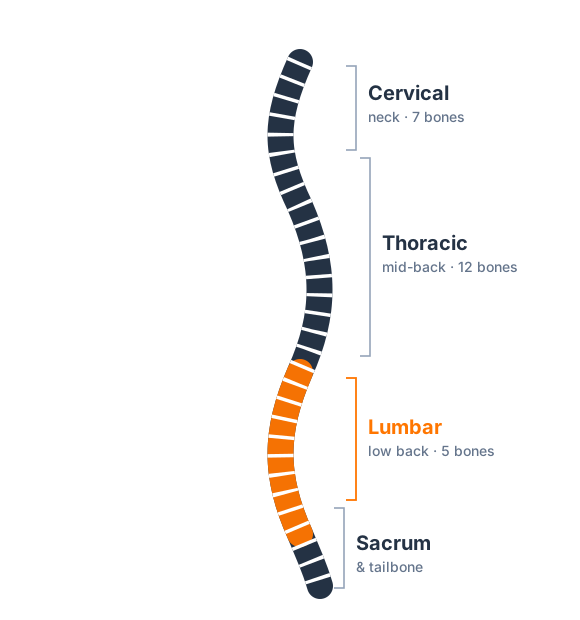
How a Crash Injures Your Lower Back
It helps to picture what your lower back is actually absorbing in the moment of a crash. The seat and belt hold you in place while the rest of your body is jolted, and the lumbar spine — built to carry load but not to be wrenched this fast — takes much of the force. Several things can happen at once, and often more than one is involved:
- Soft-tissue strain — the muscles and ligaments of the lower back are overstretched by the sudden motion, the same injury as a lumbar sprain
- Disc injury — the abrupt compression and twisting can irritate or herniate a disc, which may press on a nearby nerve and send symptoms down the leg; this is the territory of a lumbar herniated disc and disc problems
- Facet-joint injury — the small paired joints at the back of the spine can be jarred and inflamed, a common and often-overlooked source of post-crash back pain
- Muscle guarding — the body reflexively tightens the surrounding muscles to protect the injured area, which itself adds pain and stiffness
The amount of pain doesn't always match how severe the crash appeared. A dented bumper and a genuinely injured back can come from the very same fender-bender.
Why the Pain Is So Often Delayed
The delay is the single most misunderstood thing about accident injuries — and the reason so many people skip getting checked when they shouldn't.
On top of the adrenaline, inflammation itself takes time to build. The tissues get overstretched at the moment of impact, but the swelling and chemical response that make them ache develop over the following hours. That's the one-two combination — masked pain plus delayed inflammation — that leaves people surprised to wake up stiff a day after a crash they thought they'd walked away from.
Common Symptoms to Watch For
Low-back symptoms after an accident can appear immediately or build over the next day or two. Watch for:
- Low-back stiffness and soreness, especially when bending, twisting, or getting up from a seat
- Reduced range of motion in the lower back, and a sense of moving stiffly to protect it
- Muscle spasm — a tight, guarding band across the lower back
- Pain, tingling, or numbness traveling into the buttock or down the leg, which can point to nerve or disc problems or sciatica
- Pain that's worse with certain positions — sitting, standing, or moving a particular way
- Aching that spreads into the hip or the mid-back
If any of these show up in the days after your crash, don't brush them off as "just soreness" that will pass on its own.
Who's Most at Risk?
Anyone in a collision can develop back pain, but some factors increase the risk:
- Higher-force or rear-end and side impacts, which load and twist the spine efficiently
- Older adults, whose spinal tissues are less flexible and slower to heal
- People with prior back injuries or existing disc wear, who may already have vulnerable areas
- Being unaware of the impact before it happens, so the muscles can't brace
- A poor seated position at the moment of impact — turned, leaning, or slouched
How Your Injury Is Evaluated at Thrive
Because accident injuries so often don't show up on a basic image, a careful hands-on evaluation is what turns "my back hurts" into a clear, workable plan. When you come in, Dr. Rubinstein starts with the story of the crash: the direction of the impact, whether you saw it coming, your position in the vehicle, when your symptoms began, and how they've changed since. That history alone points to which tissues are likely involved.
From there, the exam is movement-based:
- Range-of-motion testing — seeing how far and how comfortably your back bends, twists, and extends to find the guarded or restricted directions
- Palpation — feeling along the lower back and pelvis to locate joint restrictions, muscle spasm, and tender points
- Orthopedic and neurological checks — testing strength, reflexes, and sensation in the legs to make sure a nerve isn't being compressed
- Screening for red flags — ruling out signs of a fracture, significant nerve involvement, or a head injury from the same crash that would need imaging or a referral
In many straightforward cases the clinical exam is enough to understand your injury and begin care; when the findings warrant it — a suspected disc or nerve injury, significant trauma, or a red flag — imaging or a referral is arranged. Getting evaluated early also means your injury is documented while it's fresh, so the plan fits what's actually going on.
What to Expect From Care at Thrive Chiropractic
At Thrive Chiropractic in Troy, MI, your care is matched to your recovery. Early on, it focuses on calming inflammation and restoring gentle motion; as you heal, it shifts toward rebuilding strength and stability so the pain doesn't linger. A typical plan includes:
- Soft-tissue and massage therapy to release the muscle guarding that follows a crash and support the injured tissue
- Gentle chiropractic adjustments or mobilization to restore motion to the affected lower-back and pelvic joints once the acute flare allows
- Spinal decompression when the exam points to a disc pressing on a nerve and sending symptoms down the leg
- A staged, comfortable approach that respects healing tissue and rebuilds strength, plus foot mechanics with custom orthotics where relevant
Nothing is forced — the aim is to help your back heal in the right sequence rather than push through pain. If anything suggests more than a soft-tissue injury, Dr. Rubinstein will say so and coordinate the right next step.
Recovery Timeline & What to Do in the Days After a Crash
Most people want to know how long this will take. A mild strain and a more forceful injury follow different timelines, but the general arc is reassuring: the first days to a couple of weeks are about settling inflammation and easing stiffness; over the following weeks, motion returns and daily activities get easier; from there, the focus moves to rebuilding strength so the back holds up to normal life. A disc injury tends to take longer and needs a more careful progression. Starting care early tends to make that whole curve smoother.
A few practical steps help protect your back in the meantime:
- Don't wait for the pain to prove itself. Because symptoms can be delayed, it's worth being seen even if you feel okay at first.
- Keep gentle movement in your day within a pain-free range — light walking beats prolonged bed rest, which stiffens the back.
- Use ice early. In the first days, ice can help calm inflammation in the injured area; heat helps relax a guarded, spasming back after that.
- Mind how you sit and lift while you heal — bend at the hips, keep loads close, and avoid long stretches slouched in one position.
When to Seek Prompt or Emergency Care
Most back pain after a crash is a soft-tissue or joint injury that recovers well with the right care. But certain symptoms can signal a more serious problem — significant nerve or spinal-cord involvement, or a head injury sustained in the same impact — and those need immediate attention rather than a wait-and-see approach.
Short of an emergency, reach out to Thrive promptly if you notice back pain or stiffness that appears or worsens in the hours and days after the crash, numbness or tingling into the buttock or leg, or reduced back motion. Early care makes recovery smoother — you can schedule a visit here.
Frequently Asked Questions
The questions Dr. Rubinstein hears most after a collision — why the back hurts days later, whether a minor crash is worth checking, and how long recovery takes — are answered in the FAQ section on this page. If your situation isn't covered there, the team is glad to talk it through before you come in.
Back Pain Relief Guide (PDF)A one-page take-home guide: simple steps that help now, what's usually behind back pain, and the warning signs that mean it's time to see a doctor.PDFThis article is for general education and is not a substitute for professional medical advice, diagnosis, or treatment. Always consult a qualified healthcare provider about your specific situation.
Frequently Asked Questions
Why does my back hurt days after the accident?
After a crash, adrenaline can mask pain at first. As that adrenaline fades and the injured tissues become inflamed over the next day or two, low-back stiffness and soreness often set in. Delayed back pain after a car accident is very common and worth having evaluated, even if you felt fine at the scene.
Do I need to get checked after a minor accident?
It's a good idea. Even low-speed collisions can generate enough force to strain the lower back or irritate a disc, and symptoms don't always match how the crash looked. An early evaluation lets us find and address injuries before they become long-standing problems — and documents them while they're fresh.
How can chiropractic care help my back after a car accident?
Chiropractic care restores motion to spinal joints that stiffened after the impact, eases the protective muscle guarding that follows, and supports the soft tissues as they heal. If the exam points to a disc pressing on a nerve, care may include spinal decompression. Everything is gentle and staged to match where you are in your recovery.
How long will my back take to feel better?
Many people feel meaningfully better within a few weeks, though more forceful impacts, a disc injury, or prior back problems can extend that to a few months. The force of the crash, your overall health, and how soon you start care all matter. After examining you, Dr. Rubinstein will give you a realistic timeline for your specific situation.
Should I still get checked if my car barely had any damage?
Yes. The amount of visible vehicle damage is a poor guide to whether your back was injured — a lightly dented bumper and a genuinely strained back can come from the same low-speed tap. Because the sudden jolt can overstretch tissue and load the discs and joints, even a modest impact can hurt the lower back.
Ready to get evaluated at Thrive Chiropractic?
Dr. Rubinstein will assess what’s really going on and build a care plan tailored to you. Reach out and we’ll get you scheduled.
2133 Crooks Road | Troy MI 48084