
Soft-Tissue Injuries After a Car Accident
Sprains and strains of the muscles, ligaments, and tendons are the most common injuries in a car accident — and among the most misunderstood. This guide explains what soft-tissue injuries are, why they're 'invisible' on an X-ray yet genuinely real, how inflammation and healing unfold over time, and how soft-tissue therapy and gentle adjustments help you recover.
What Soft-Tissue Injuries Are
When people hear "car accident injury," they often picture a broken bone. But the most common injuries in a collision aren't to bone at all — they're to the body's soft tissues: the muscles, ligaments, and tendons that move and stabilize your joints. A sudden force overstretches or partially tears these tissues, and the result is what we call a strain (an injured muscle or tendon) or a sprain (an injured ligament).
Soft-tissue injuries can affect the neck, the back, and the shoulders — anywhere the body was jolted, twisted, or restrained hard by the seatbelt in the moment of impact. Whiplash is the best-known example, but the same kind of injury can happen up and down the body. These injuries sit squarely within the category of auto-accident injuries, and they respond well to care when they're addressed early. The frustrating part is that, because nothing is broken, they're easy to underestimate — which is exactly what the rest of this guide is here to clear up.
Why a Crash Injures Soft Tissue
To understand why a collision is so hard on soft tissue, it helps to picture what your body absorbs in that split second. Your muscles, ligaments, and tendons are built to move your joints and hold them steady — but they have limits on how far and how fast they can be stretched. A crash blows past those limits in a fraction of a second.
Several things happen at once, and usually more than one is involved:
- Overstretching and tearing — the sudden motion pulls the muscles and ligaments past their comfortable range, straining or partially tearing the fibers
- Muscle guarding — the body reflexively tightens the surrounding muscles to protect the injured area, which adds its own stiffness and pain
- Joint restriction — the joints those tissues control can stiffen and lose their normal glide as everything tightens up
- Multiple regions at once — the neck, upper back, and shoulders are often affected together, since they all move as the body is thrown and restrained
The amount of pain doesn't always match how dramatic the crash looked. A dented bumper and a genuinely injured neck or back can come from the very same fender-bender.
Why They're 'Invisible' on an X-ray
This is the part that trips people up more than any other — and it's worth understanding clearly.
So an injury being "invisible" on an image doesn't make it imaginary. It simply means the right tool for finding it is a careful, movement-based evaluation — feeling how the tissues respond and watching how you move — rather than a picture of your bones.
The Inflammation & Healing Timeline
Soft-tissue injuries heal in stages, and knowing the arc helps you understand both why the pain is often delayed and why patience pays off.
First comes inflammation. At the moment of impact the tissues are overstretched, but the swelling and chemical response that make them ache build over the hours that follow. This is a big reason so many people feel far worse the morning after a crash than they did at the scene — the inflammation simply hadn't peaked yet. Adrenaline from the collision can mask the discomfort at first, adding to the delay.
Next comes the repair phase, where the body knits the injured fibers back together over the following weeks. The sharp pain eases, but the tissue is still healing and can feel tight or easily aggravated. Finally there's a strengthening phase, where the repaired tissue rebuilds its resilience so it can handle normal load again. Rushing back to full activity before that last phase is a common way to stall or re-aggravate a recovery. Many people feel meaningfully better within a few weeks, while more involved injuries take longer — and starting care early tends to make the whole curve smoother.
Common Symptoms to Watch For
Soft-tissue symptoms after a crash can appear right away or build over the next day or two. Watch for:
- Stiffness and soreness in the neck, back, or shoulders, especially with movement
- Reduced range of motion — moving feels tight, guarded, or restricted
- Muscle spasm — a tight, protective band across the injured area
- Tenderness that's worse when you press on or use the affected muscles
- Headaches stemming from a tight, injured neck, which can become cervicogenic headaches
- Swelling or a sense of heat over the injured tissue in some cases
If any of these show up in the days after your crash, don't brush them off as "just soreness" that will pass on its own. If the injury involved your neck or back specifically, our guides on neck pain after a car accident and back pain after a car accident go deeper on each.
How Soft-Tissue Injuries Are Evaluated at Thrive
Because soft-tissue injuries don't show up on a basic image, a careful hands-on evaluation is what turns "I'm sore all over" into a clear, workable plan. When you come in, Dr. Rubinstein starts with the story of the crash: the direction of impact, your position in the vehicle, when your symptoms began, and how they've changed since. That history alone points to which tissues are likely involved.
From there, the exam is movement-based:
- Range-of-motion testing — watching how far and how comfortably you move to find the guarded or restricted directions
- Palpation — feeling along the muscles, ligaments, and joints to locate spasm, tender points, and restriction
- Orthopedic and neurological checks — testing strength, reflexes, and sensation to make sure a nerve isn't involved
- Screening for red flags — ruling out signs of a fracture, significant nerve injury, or a head injury from the same crash that would need imaging or a referral
In many straightforward cases the clinical exam is enough to understand your injury and begin care; when the findings warrant it, imaging or a referral is arranged. Getting evaluated early also means your injury is documented while it's fresh.
How Soft-Tissue Therapy & Gentle Adjustments Help
At Thrive Chiropractic in Troy, MI, care for a soft-tissue injury is matched to where you are in recovery. Early on it focuses on calming inflammation and easing guarding; as you heal it shifts toward restoring motion and rebuilding strength. A typical plan combines:
- Soft-tissue and massage therapy to release the protective muscle guarding a crash creates and support the injured tissue as it heals
- Gentle chiropractic adjustments or mobilization to restore motion to joints that stiffened alongside the injured tissue, once the acute flare allows
- Upper cervical care when the top of the neck is involved — common when the injury also brings on headaches
- A staged, comfortable approach that respects healing tissue and rebuilds resilience rather than forcing motion
If the injury involves a disc pressing on a nerve, care may also draw on spinal decompression. Chiropractic care is well suited to the musculoskeletal recovery from soft-tissue injuries and to co-managing your care alongside your other providers. Nothing is forced — the aim is to help the tissues heal in the right sequence rather than push through pain.
What You Can Do at Home
Alongside your care, a few habits support soft-tissue healing:
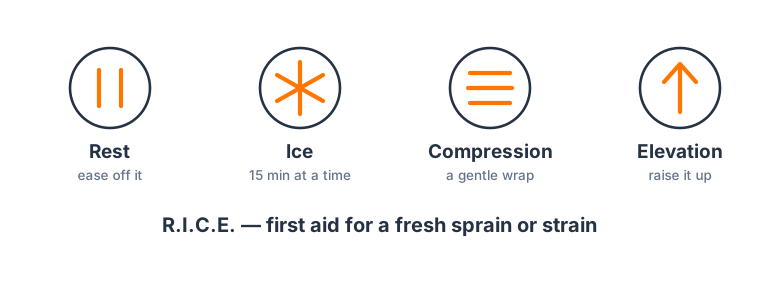
- Use ice early, then heat. Ice helps calm inflammation in the first days; gentle heat can loosen tight, guarded muscles later on.
- Keep moving gently. Light movement within a pain-free range usually beats complete rest, which leaves the tissues stiffer.
- Pace yourself back. Ease into normal activity gradually, and let comfort guide you rather than pushing through pain.
- Don't wait for the pain to prove itself. Because symptoms can build over days, it's worth being seen even if you feel okay at first.
When to Seek Prompt or Emergency Care
Most soft-tissue injuries recover well with the right care. But certain symptoms can signal a more serious problem — significant nerve involvement, or a head injury sustained in the same impact — and those need immediate attention rather than a wait-and-see approach.
Short of an emergency, reach out to Thrive promptly if you notice stiffness or soreness that appears or worsens in the hours and days after the crash, muscle spasm that won't let go, or reduced motion. Early care makes recovery smoother — you can schedule a visit here.
Frequently Asked Questions
The questions Dr. Rubinstein hears most about soft-tissue injuries — what they are, why they don't show on an X-ray, and how long they take to heal — are answered in the FAQ section on this page. If your situation isn't covered there, the team is glad to talk it through before you come in.
Auto Accident Recovery Guide (PDF)A one-page take-home guide: what to do after a crash, common injuries, and the warning signs that need emergency care.PDFThis article is for general education and is not a substitute for professional medical advice, diagnosis, or treatment. Always consult a qualified healthcare provider about your specific situation.
Frequently Asked Questions
What exactly is a soft-tissue injury?
It's an injury to the body's soft tissues — the muscles, ligaments, and tendons — rather than to bone. In a car accident, the sudden force overstretches or tears these tissues, producing what we call a strain (muscle or tendon) or a sprain (ligament). They're the most common injuries in a collision and, despite being 'invisible' on an X-ray, they can genuinely hurt and limit your movement.
Why doesn't my injury show up on an X-ray?
X-rays are designed to show bone, not soft tissue. Because a sprain or strain injures muscles, ligaments, and tendons rather than bone, a basic X-ray can look completely normal even when you're genuinely hurt. That's why a hands-on exam of how you move matters so much — imaging is used to rule out fractures and other serious problems, not to prove a soft-tissue injury.
How long do soft-tissue injuries take to heal?
It depends on how badly the tissue was overstretched and where. Many people feel meaningfully better within a few weeks, while more involved injuries take longer. Healing moves through stages — inflammation first, then repair, then a strengthening phase — and rushing back to full activity before that last phase can set you back. After examining you, Dr. Rubinstein will give you a realistic timeline for your situation.
Can chiropractic care help a soft-tissue injury?
Yes. Soft-tissue therapy and massage release the protective muscle guarding that follows a crash, and gentle adjustments restore motion to joints that stiffened alongside the injured tissue. Together they address both the tightness you feel and the underlying restriction, supporting the tissues as they heal. Care is gentle and staged to match where you are in recovery.
Should I get checked even if my pain feels minor?
Yes. Soft-tissue soreness often builds over the hours and days after a crash as inflammation sets in, so mild early pain can worsen. An early evaluation lets us catch the injury before it settles into a stiff, guarded pattern, guide your recovery from the start, and document it while it's fresh — even if the crash looked minor.
Ready to get evaluated at Thrive Chiropractic?
Dr. Rubinstein will assess what’s really going on and build a care plan tailored to you. Reach out and we’ll get you scheduled.
2133 Crooks Road | Troy MI 48084