
Back & Spine Injuries After a Car Accident
A car accident can injure the spine in several distinct ways — a lumbar sprain or strain, an irritated or herniated disc, or inflamed facet joints. This guide explains each of these spine-specific injuries, how they're evaluated, how chiropractic care helps, and the red flags that signal nerve involvement and mean you should be seen right away.
How a Crash Injures Your Spine
Your spine is built to carry load and move through your day — but it isn't built to be wrenched, compressed, and twisted in a fraction of a second, which is exactly what a collision does. When your vehicle is struck, the seat and belt hold you in place while the rest of your body is jolted, and the spine absorbs much of that force. Depending on the direction and severity of the impact, that can injure the spine in several distinct ways — and often more than one is involved at once.
The three most common spine-specific injuries from a crash are a lumbar sprain or strain, a disc injury or herniation, and facet-joint irritation. Each behaves a little differently, which is why sorting out which is involved matters so much for your care. These injuries sit within the broader picture of auto-accident injuries and overlap heavily with ordinary back pain — but a crash tends to load the spine harder and faster than everyday life does. If your lower back is the main problem, our companion guide on back pain after a car accident covers that side in depth; this guide focuses on the specific spinal injuries a crash can cause.
Lumbar Sprain & Strain
The most common spine-related injury from a crash is a strain of the muscles and tendons or a sprain of the ligaments in the lower back. The sudden motion overstretches these soft tissues past their comfortable range, and the body responds by tightening the surrounding muscles protectively — the muscle guarding that adds its own stiffness and ache.
A lumbar sprain or strain tends to feel like a deep, localized soreness in the lower back that's worse with bending, twisting, or getting up from a seat. It usually stays in the back rather than shooting down the leg, and while it can be genuinely painful, it's often the most straightforward of the spine injuries to recover from. This is the same injury as an ordinary lumbar sprain — a crash is simply a more forceful way to cause it.
Disc Injury & Herniation
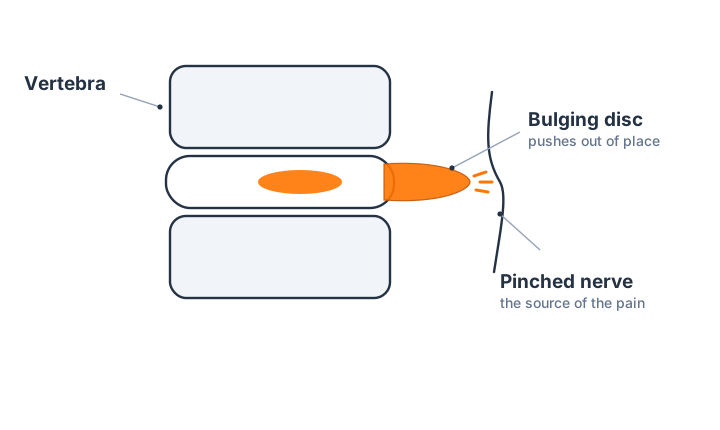
The discs are the cushions between your vertebrae, and the abrupt compression and twisting of a crash can irritate or herniate one. When a disc bulges or herniates, it can press on a nearby nerve — and that's when symptoms travel beyond the back itself.
The hallmark of a disc pressing on a nerve is pain, tingling, or numbness that radiates from the lower back down into the buttock and leg, sometimes as far as the foot. This is the territory of a lumbar herniated disc and disc problems generally, and the radiating leg pattern is what's commonly called sciatica. A disc injury tends to take longer to recover than a simple strain and needs a more careful, staged progression — which is why identifying it early matters. It's also the injury most likely to involve a nerve, so the red flags later in this guide are especially relevant here.
Facet-Joint Irritation
Behind the discs, at the back of each spinal segment, sit the small paired facet joints that guide and limit the spine's motion. A crash can jar and inflame these joints — a common and often-overlooked source of post-accident back pain.
Facet irritation tends to produce a more localized, achy back pain that's often worse when you lean back or twist, and it can feel stiff after periods of rest. Because it doesn't usually send symptoms down the leg the way a disc does, it's easy to dismiss as "just a sore back" — but jarred, inflamed facet joints are a real and treatable injury, and they respond well to restoring normal motion to the affected segments.
Why Symptoms Are Often Delayed
One of the most misunderstood things about spine injuries from a crash is that they frequently don't announce themselves right away.
Because of this delay, it's worth being evaluated after a crash even if your back feels only mildly sore at first — the picture can change over the next day or two.
How Spine Injuries Are Evaluated at Thrive
Because a strain, a disc injury, and a facet injury can all feel like "my back hurts" at first — yet call for different care — a careful hands-on evaluation is what turns a vague ache into a clear, workable plan. When you come in, Dr. Rubinstein starts with the story of the crash: the direction of the impact, your position in the vehicle, when your symptoms began, and whether anything travels down the leg. That history alone points to which structures are likely involved.
From there, the exam is movement-based:
- Range-of-motion testing — seeing how far and how comfortably your back bends, twists, and extends to find the guarded or restricted directions
- Palpation — feeling along the lower back and pelvis to locate joint restriction, muscle spasm, and tender points
- Orthopedic and neurological checks — testing strength, reflexes, and sensation in the legs to see whether a disc is pressing on a nerve
- Screening for red flags — ruling out signs of significant nerve involvement, a fracture, or a head injury from the same crash that would need imaging or a referral
In many straightforward cases the clinical exam is enough to understand your injury and begin care; when the findings warrant it — a suspected disc or nerve injury, significant trauma, or a red flag — imaging or a referral is arranged. Getting evaluated early also means your injury is documented while it's fresh, so the plan fits what's actually going on.
What to Expect From Care at Thrive Chiropractic
At Thrive Chiropractic in Troy, MI, your care is matched to your injury and your recovery. Early on it focuses on calming inflammation and restoring gentle motion; as you heal it shifts toward rebuilding strength and stability so the problem doesn't linger. A typical plan includes:
- Soft-tissue and massage therapy to release the muscle guarding that follows a crash and support the injured tissue
- Gentle chiropractic adjustments or mobilization to restore motion to the affected spinal and pelvic joints once the acute flare allows — especially helpful for sprain and facet injuries
- Spinal decompression when the exam points to a disc pressing on a nerve and sending symptoms down the leg
- A staged, comfortable approach that respects healing tissue and rebuilds strength, plus foot mechanics with custom orthotics where relevant
Chiropractic care is well suited to the musculoskeletal recovery from these injuries and to co-managing your care alongside your other providers. Nothing is forced — the aim is to help your spine heal in the right sequence rather than push through pain. If anything suggests more than a musculoskeletal injury, Dr. Rubinstein will say so and coordinate the right next step.
Recovery & What to Do in the Days After a Crash
A mild strain and a disc injury follow different timelines, but the general arc is reassuring: the first days to a couple of weeks are about settling inflammation and easing stiffness; over the following weeks, motion returns and daily activities get easier; from there, the focus moves to rebuilding strength so the back holds up to normal life. A disc injury tends to take longer and needs a more careful progression. Starting care early tends to make that whole curve smoother.
A few practical steps help protect your spine in the meantime:
- Don't wait for the pain to prove itself. Because symptoms can be delayed, it's worth being seen even if you feel okay at first.
- Keep gentle movement in your day within a pain-free range — light walking beats prolonged bed rest, which stiffens the back.
- Use ice early. In the first days, ice can help calm inflammation; gentle heat helps relax a guarded, spasming back after that.
- Mind how you sit and lift while you heal — bend at the hips, keep loads close, and avoid long stretches slouched in one position.
When to Seek Prompt or Emergency Care
Most back and spine injuries from a crash are musculoskeletal and recover well with the right care. But certain symptoms signal a more serious problem — significant nerve or spinal-cord involvement, or a head injury from the same impact — and those need immediate attention rather than a wait-and-see approach.
Short of an emergency, reach out to Thrive promptly if you notice back pain or stiffness that appears or worsens in the hours and days after the crash, numbness or tingling into the buttock or leg, or reduced back motion. Early care makes recovery smoother — you can schedule a visit here.
Frequently Asked Questions
The questions Dr. Rubinstein hears most about spine injuries after a crash — which injuries a collision causes, how to tell a disc from a muscle, and how long recovery takes — are answered in the FAQ section on this page. If your situation isn't covered there, the team is glad to talk it through before you come in.
Auto Accident Recovery Guide (PDF)A one-page take-home guide: what to do after a crash, common injuries, and the warning signs that need emergency care.PDFThis article is for general education and is not a substitute for professional medical advice, diagnosis, or treatment. Always consult a qualified healthcare provider about your specific situation.
Frequently Asked Questions
What kinds of back injuries can a car accident cause?
The most common are a lumbar sprain or strain (overstretched muscles and ligaments in the lower back), a disc injury or herniation (which can press on a nerve and send symptoms down the leg), and facet-joint irritation (the small paired joints at the back of the spine getting jarred and inflamed). Often more than one is involved at once. A careful exam sorts out which tissues are affected so your care fits the actual injury.
How do I know if a disc was injured versus a muscle?
It's not always obvious from how it feels, which is why an exam matters. As a rule of thumb, a disc pressing on a nerve tends to send pain, tingling, or numbness down into the buttock or leg, while a muscle or ligament strain usually stays more localized to the back and is worse with certain movements. Dr. Rubinstein uses movement and neurological testing to tell them apart and, when needed, arranges imaging.
Can chiropractic care help a spine injury from a crash?
Yes, for the musculoskeletal injuries a crash causes. Chiropractic care restores motion to spinal joints that stiffened after the impact, eases the protective muscle guarding that follows, and supports the injured tissue as it heals. If the exam points to a disc pressing on a nerve, care may include spinal decompression. Everything is gentle and staged, and if an injury needs medical evaluation, Dr. Rubinstein will coordinate it.
How long will a back injury from a car accident take to heal?
It depends on the injury. A lumbar sprain often improves within a few weeks, while a disc injury tends to take longer and needs a more careful, staged progression. The force of the crash, your overall health, any prior back problems, and how soon you start care all matter. After examining you, Dr. Rubinstein will give you a realistic timeline for your specific situation rather than a generic estimate.
Should I get checked if my back only feels a little sore after a minor crash?
Yes. Back and spine injuries often build over the hours and days after a crash as inflammation sets in, and the amount of visible car damage is a poor guide to whether your spine was hurt. An early evaluation catches injuries before they settle in, documents them while they're fresh, and gives your recovery the best possible start — even after a low-speed collision.
Ready to get evaluated at Thrive Chiropractic?
Dr. Rubinstein will assess what’s really going on and build a care plan tailored to you. Reach out and we’ll get you scheduled.
2133 Crooks Road | Troy MI 48084